- Year
- 2017
- Type
- Hardware
Solar-powered fine dust sensor
A citizen science fine dust sensor from the Luftdaten.info project, which I set up to run on solar power.

For years I looked at fine dust only once a year, when the fireworks on New Year’s Eve sent the values of the Hamburg air quality network through the roof. With the Dieselgate debate in 2017, air quality became an everyday topic. So I was excited about Luftdaten.info, a project that started in Stuttgart as part of Code for Germany. Its idea: build fine dust sensors from cheap parts, so that citizens can set up their own sensors and together form a large measuring network.
The sensor
The sensor, known as the #airrohr (Rohr is German for pipe), is based on a NodeMCU ESP8266 board for processing and Wi-Fi, with an SDS011 fine dust sensor connected to it. A DHT22 adds temperature and humidity. Everything sits inside two bends of plastic drainpipe, which keep out the rain but let the air in. The project website has detailed build instructions, and the firmware is open source.
Going solar
While I was putting it together, I had the idea to power the sensor with a solar panel or a small wind turbine. I went for a fairly cheap 14 watt folding solar panel from Lidl with a 12,000 mAh power bank as a buffer. First tests in direct sunlight showed that the sensor ran fine on it.
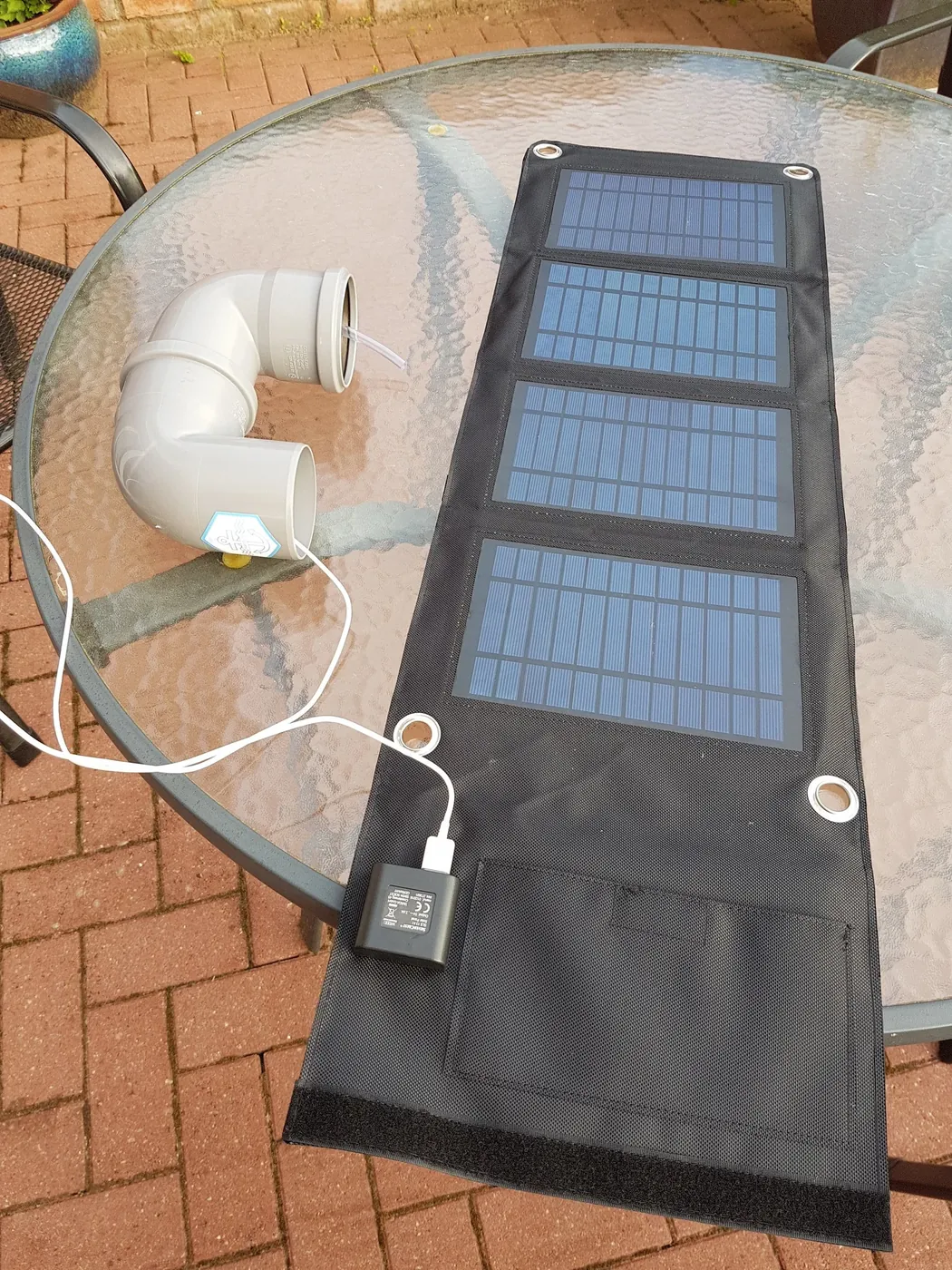 First test in the garden: solar panel, power bank and sensor.
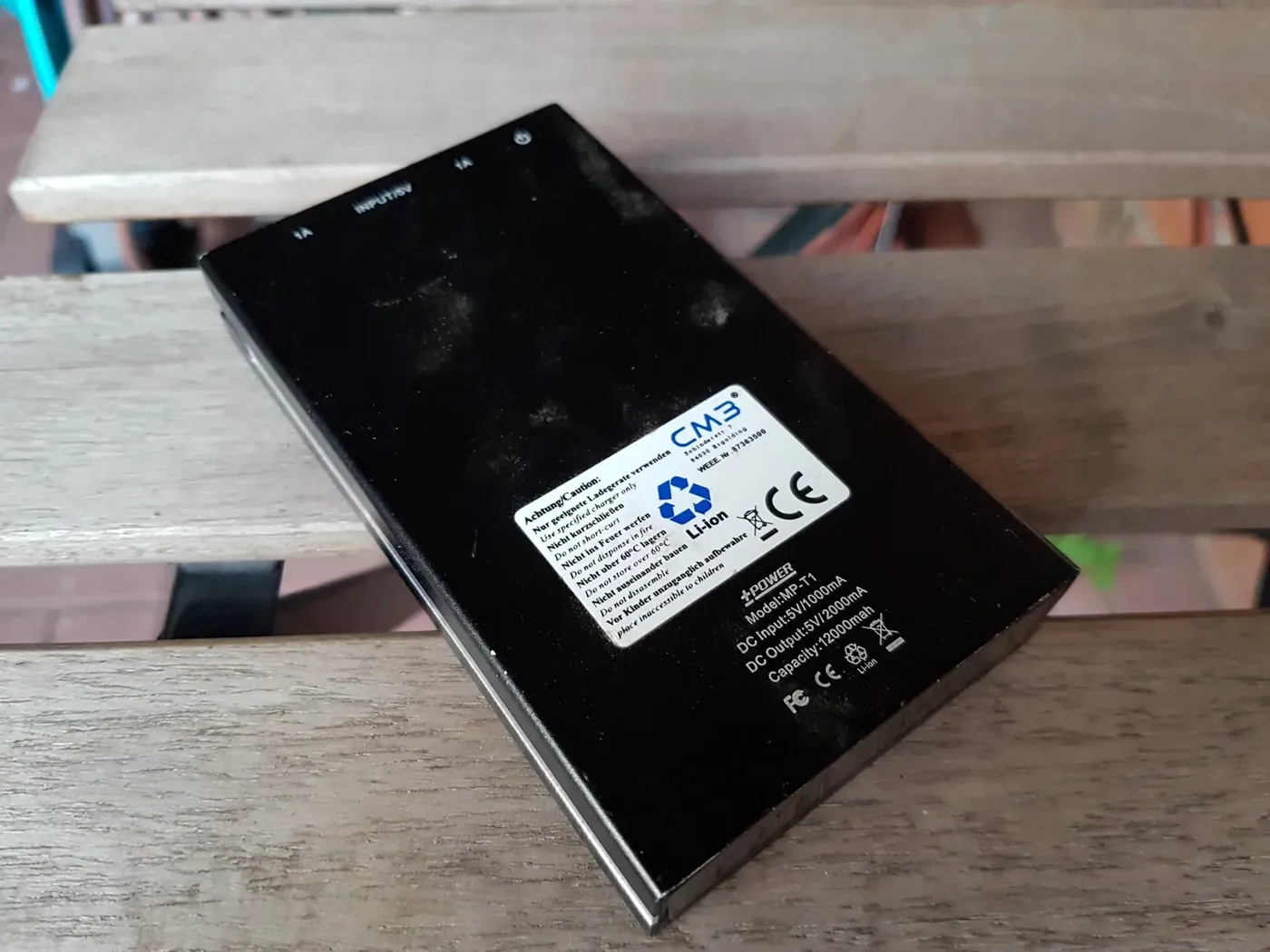 The 12,000 mAh buffer battery.
To make it weatherproof, I sealed the panel in clear plastic and mounted it on the roof of our carport.
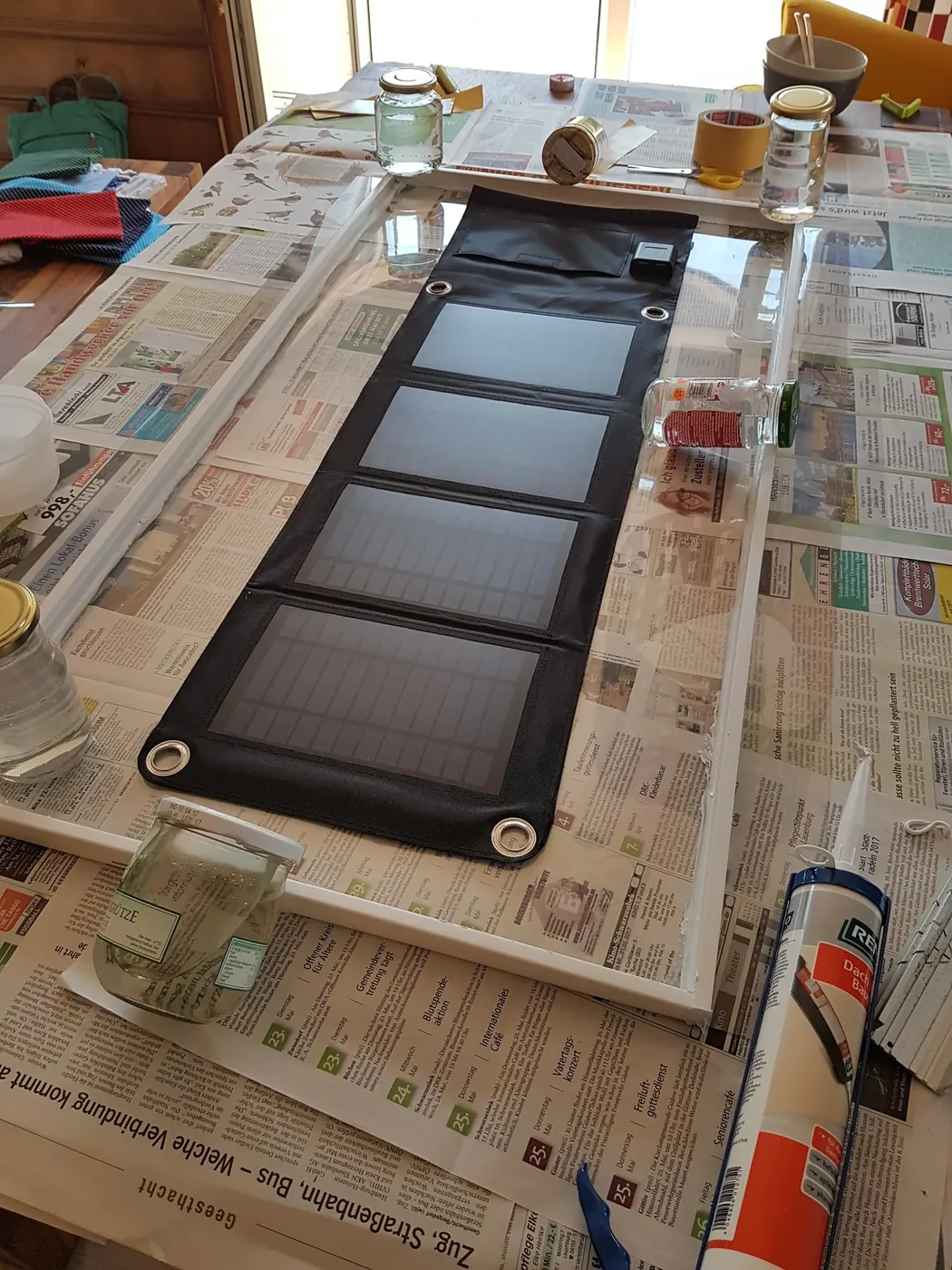 Weatherproofing the panel.
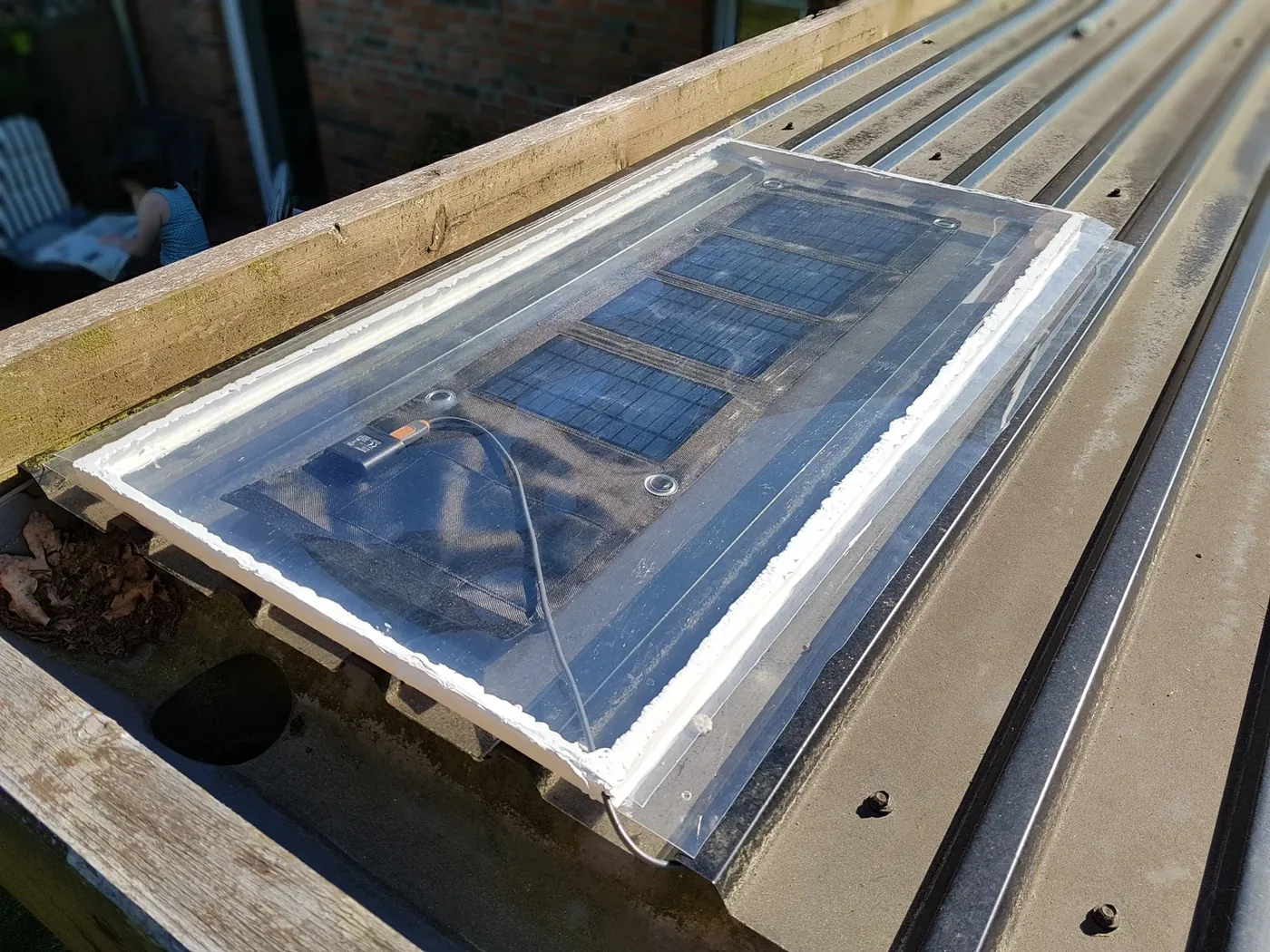 On the carport roof.
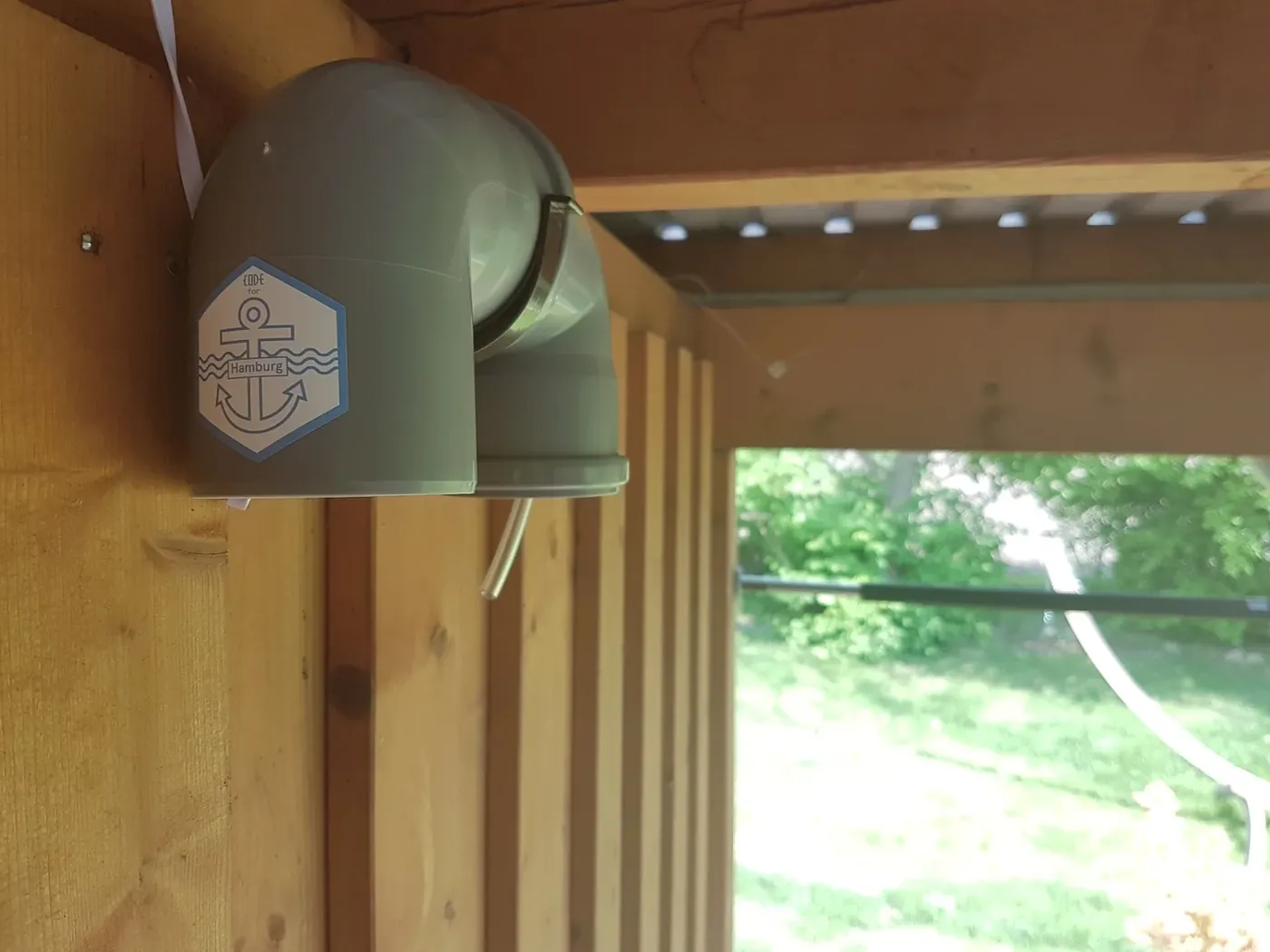 The finished #airrohr under the carport.
I wasn’t sure the setup would really be enough to run the sensor around the clock, given the losses in the battery and cables. It turned out better than I expected: after a month it was still running on solar power alone, and the first short blackout came in mid-July, half an hour one night after a rainy day.
The data
The sensor’s values can be read directly from the sensor over the local network, and they are also sent to the central Luftdaten.info server, where they show up on a map together with all the other sensors. There was even an Amazon Alexa skill that would read out the current value.
First published on my old blog in May 2017.